science
Elderberry (Sambucus nigra, S. canadensis): Comprehensive Cultivation, Processing, and Use Guide
Complete guide to elderberry cultivation covering Sambucus nigra and canadensis, growing parameters, propagation, harvest optimization.
Botanical Description and Modern Scientific Context
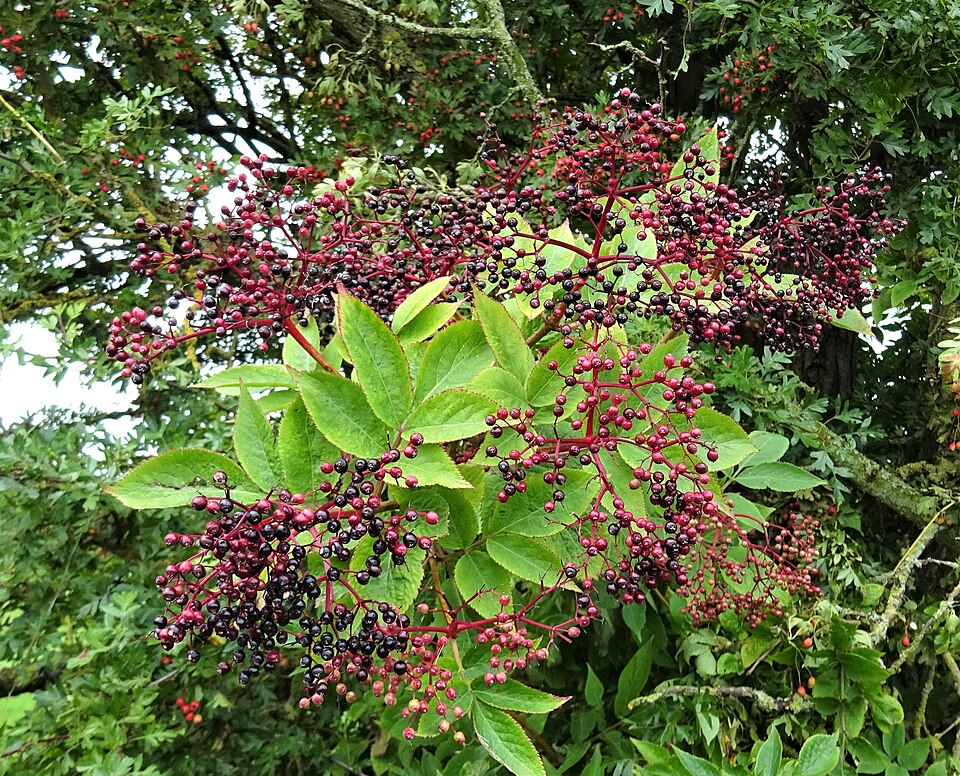
Elderberry refers primarily to Sambucus nigra (European elderberry) and Sambucus canadensis (American elderberry), deciduous perennial shrubs that typically reach 6–12 feet (1.8–3.7 m) in height, occasionally exceeding this under high-fertility conditions. The plants exhibit hollow, pith-filled stems, opposite pinnately compound leaves with 5–9 serrated leaflets, and large, flat-topped inflorescences (corymbs) composed of dozens to hundreds of small, cream-colored flowers.
In contemporary scientific literature, elderberry is valued for its unusually high concentration of anthocyanins, flavonols, phenolic acids, and complex polysaccharides. The dominant pigments—cyanidin-3-glucoside and cyanidin-3-sambubioside—are widely studied for their roles in oxidative signaling pathways, endothelial function, and modulation of inflammatory mediators, particularly through indirect interaction with cytokine cascades and gut-derived metabolites.
Compound Behavior In Vivo
Research consistently notes that elderberry compounds do not act as isolated agents in the body; rather, they interact with digestive enzymes, intestinal microbiota, and cellular redox systems. These interactions are discussed in the context of immune signaling, mitochondrial stress response, and metabolic regulation, within the framework of food-based and botanical research rather than pharmaceutical intervention.
Geographic Origin, Ecology, and Ethnobotanical Use
Elderberry is native to temperate regions of Europe, North America, and western Asia, where it naturally colonizes forest margins, riparian corridors, hedgerows, and disturbed soils. Sambucus canadensis is indigenous to eastern and central North America, while Sambucus nigra has a long cultivation history across Europe and the Mediterranean basin.
Historical records from Greco-Roman texts, medieval European herbals, and Indigenous North American traditions describe elderberry as a foundational seasonal plant. Flowers were commonly infused or fermented, berries were cooked into syrups and preserves, and woody tissues were used for tools and instruments.
Safety Note: Raw Consumption
A consistent theme across cultures is that elderberry fruit was rarely consumed raw. Traditional processing methods—boiling, fermentation, drying—were employed to improve digestibility and safety, practices later supported by chemical analysis identifying heat-labile cyanogenic glycosides in raw tissues.
Fruit, Seed Morphology, and Reproductive Biology
Elderberry fruits are small drupes measuring approximately 4–6 mm in diameter, produced in large, pendulous clusters that can weigh 1–4 kg per plant under optimal conditions. Each berry contains 3–5 flattened, tan-to-light-brown seeds surrounded by deeply pigmented pulp.
During development, berries transition from green to red and finally to dark purple-black as anthocyanin synthesis accelerates. Full physiological ripeness is indicated by uniform coloration, peak sugar accumulation, and maximum pigment density.
Seed Propagation and Dormancy
Seeds exhibit physiological dormancy and require cold stratification for reliable germination. Stratification periods of 60–90 days at 1–4°C (34–39°F) are commonly reported. Due to genetic variability and delayed fruiting, seed propagation is generally reserved for breeding and conservation rather than production.
Climate Requirements and Environmental Parameters
Elderberry is well adapted to USDA hardiness zones 3–9, tolerating winter temperatures below -30°C (-22°F) while maintaining strong regrowth capacity in spring.
| Parameter | Optimal Range |
|---|---|
| Growing Season Temperature | 18–30°C (65–86°F) |
| Winter Chilling Requirement | 800–1,200 hours below 7°C (45°F) |
| Sun Exposure | Full sun to light shade (full sun maximizes yield) |
| Relative Humidity | 50–80% |
| Annual Water | 25–40 in (635–1,000 mm) with consistent soil moisture |
| Cold Hardiness | Below -30°C (-22°F) |
Elderberry demonstrates higher tolerance for saturated soils and periodic flooding than most fruiting shrubs, reflecting its natural association with riparian ecosystems.
Soil Characteristics and Nutrient Demands
Elderberry performs best in deep, fertile loam or silty loam soils with high organic matter content and a pH range of 5.5–6.5, though it tolerates up to pH 7.5 with adequate micronutrient availability.
Annual Nutrient Requirements (Per Acre)
| Nutrient | Rate | Notes |
|---|---|---|
| Nitrogen (N) | 60–120 lb/acre | Supports shoot development and canopy renewal |
| Phosphorus (P) | Moderate | Primarily during root establishment and flowering |
| Potassium (K) | High demand | Directly influences berry size and anthocyanin concentration |
Micronutrients such as iron, magnesium, and boron are frequently limiting in sandy or alkaline soils, with deficiencies commonly addressed through compost amendments and targeted mineral inputs.
Propagation Methods and Establishment
Elderberry is most commonly propagated through hardwood or softwood cuttings to maintain cultivar consistency and reduce time to first harvest.
| Parameter | Specification |
|---|---|
| Cutting Length | 20–25 cm (8–10 in) |
| Root Zone Temperature | 20–24°C (68–75°F) |
| Relative Humidity | 70–90% |
| Root Initiation Time | 10–21 days |
Adventitious rooting is generally reliable without hormone application, though low-concentration auxin treatments are sometimes used to synchronize rooting in nursery systems.
Growth Habit, Pruning, and Structural Management
Elderberry produces fruit on second-year and older canes. Productivity is highest when vigorous new canes are continuously renewed through annual or biennial pruning.
Plants are commonly managed as multi-cane shrubs or hedgerows spaced 6–10 feet (1.8–3 m) apart, allowing efficient light penetration and airflow. Structural supports are rarely required; however, bird exclusion netting is frequently employed due to heavy wildlife pressure on ripening fruit.
Harvest Timing and Quality Indicators
Harvest occurs when berry clusters are uniformly dark purple-black and soluble solids measure approximately 10–14 °Brix, depending on cultivar and growing conditions.
- Anthocyanin concentration peaks at full ripeness
- Premature harvest significantly reduces pigment density and extract quality
- Entire clusters are removed to minimize berry damage and oxidative degradation
Post-Harvest Handling and Preservation
Fresh elderberries are highly perishable and are generally processed within 24–48 hours of harvest.
| Method | Conditions | Notes |
|---|---|---|
| Freezing | Whole clusters at -18°C (0°F) | Preserves anthocyanins well |
| Drying | ≤45°C (113°F) | Low-temperature dehydration |
| Juicing | Heat-assisted extraction | Denatures cyanogenic compounds |
| Fermentation | Yeast or lactic cultures | Beverage and vinegar production |
Important: Heat Processing Required
Raw berries are not consumed due to cyanogenic glycosides. Heat processing volatilizes hydrogen cyanide and renders the fruit suitable for food use.
Extraction Methods and Target Compounds
Elderberry extracts focus primarily on anthocyanins, flavonols, phenolic acids, and polysaccharides, concentrated in the berry skin and pulp.
Home and Small-Scale Methods
- Hot-water decoction: 80–90°C for 30–60 minutes — standard for syrup production
- Ethanol extraction: 30–60% ethanol over 2–6 weeks — broader compound spectrum
- Glycerin extraction: extended-duration, non-alcoholic preparations
Industrial extraction methods may include membrane filtration, spray drying, and supercritical fluid processing, which allow compound fractionation but are typically inaccessible outside commercial facilities.
Culinary Use, Storage, and Integration
Elderberries are commonly incorporated into syrups, reduced juices, fermented beverages, jams, and baked goods, with cooking improving both safety and compound availability.
Finished preparations are best stored below 20°C (68°F), protected from light and oxygen to preserve anthocyanin stability. Acidic, lipid-containing, or fermented matrices are frequently used to improve shelf life and sensory qualities.
Scientific and Authoritative References
This article is informed by data and conclusions drawn from, but not limited to:
- Porter & Bode, Phytochemistry
- Vlachojannis et al., Advances in Therapy
- Wu et al., Journal of Agricultural and Food Chemistry
- USDA Plant Guide: Sambucus spp.
- Mlynarczyk et al., Nutrients
- Krawitz et al., International Journal of Molecular Sciences
- Thomas et al., HortScience
- Zakay-Rones et al., Journal of International Medical Research
- Mikulic-Petkovsek et al., Food Chemistry
- European Medicines Agency Herbal Monograph: Sambuci fructus