guides
Saw Palmetto (Serenoa repens): The Southeastern Palm Whose Berries Fuel a $200 Million Prostate Health Industry
Complete saw palmetto guide covering Serenoa repens palm ecology in the American Southeast, sustainable berry harvesting, fatty acid and phytosterol chemistry, Seminole traditional use, and the clinical evidence debate around benign prostatic hyperplasia treatment.
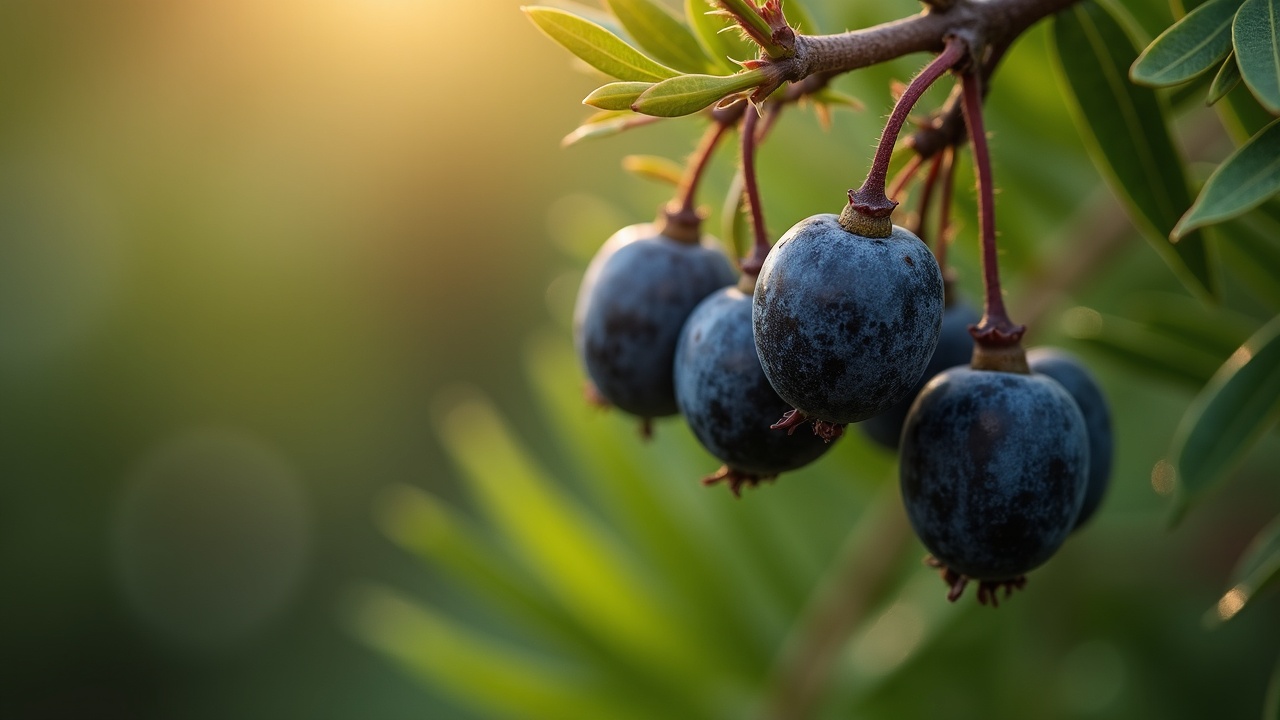
Botanical Description & Ecology
Saw palmetto (Serenoa repens) is a slow-growing, clumping fan palm native to the coastal plain of the southeastern United States, from South Carolina south through Florida and west to Louisiana. It is the most abundant understory plant in many southeastern ecosystems, forming dense thickets that can persist for hundreds of years. Individual plants are exceptionally long-lived—some specimens in Florida are estimated to be over 700 years old, making saw palmetto one of the oldest living organisms in the region.
The species name repens (creeping) refers to the palm’s unusual growth habit: unlike most palms that grow vertically, saw palmetto typically grows horizontally along the ground or just beneath the soil surface, with the crown of stiff, fan-shaped fronds rising 3–6 feet above ground level. The common name refers to the sharp, saw-toothed spines along the leaf stalks (petioles) that can inflict painful cuts—a fact intimately familiar to anyone who has walked through saw palmetto scrub.
Fire Ecology
Saw palmetto is a fire-adapted species that has co-evolved with the frequent lightning-ignited fires of the southeastern coastal plain. Its underground stems survive even intense fires, and the plant resprouts vigorously from the root crown within weeks of burning. Fire actually stimulates flowering and fruiting, and saw palmetto populations that are fire-suppressed for long periods produce fewer berries. This fire dependency creates a management tension: the ecological health of saw palmetto and the berry harvest both depend on periodic prescribed burning, which is increasingly difficult to conduct near expanding urban areas.
Habitat & Range
| Parameter | Details |
|---|---|
| USDA Hardiness Zones | 8–11 (native range); zone 7 with protection |
| Native Habitat | Pine flatwoods, scrub, sand pine, coastal hammocks; Florida and southeastern US |
| Soil | Sandy, acidic, well-drained; tolerates poor, nutrient-deficient soils |
| Light | Full sun to partial shade; berry production highest in full sun |
| Moisture | Drought-tolerant once established; tolerates seasonal flooding |
| Growth Rate | Extremely slow; 1–2 inches of trunk growth per year |
| Propagation | Seed (very slow; 3–6 months germination); division of suckers |
Berry Harvesting
Saw palmetto berries ripen from green to blue-black between August and November, primarily in Florida. The berries are olive-sized drupes with a single large seed surrounded by a thin layer of oily, fibrous flesh. Harvesting is physically demanding work, typically done by hand by contract harvesters who navigate through the spine-covered fronds in hot, insect-rich conditions. The annual Florida harvest is estimated at 15–20 million pounds of fresh berries, worth approximately $50–80 million at farm gate prices.
- Timing: Harvest when berries are fully ripe (blue-black); green berries have lower fatty acid content.
- Method: Hand-pick individual berry clusters; use heavy gloves and long sleeves for protection from petiole spines.
- Processing: Berries are typically dried whole, then either sold for extraction or ground into powder.
- Sustainability concern: Overharvesting and poaching from public lands is a significant problem. Wild harvest permits are required in Florida.
Phytochemistry
| Compound Class | Key Members |
|---|---|
| Fatty Acids | Lauric acid (25–30%), oleic acid (25–35%), myristic acid (10–15%), palmitic acid; total lipid content 80–90% of extract |
| Phytosterols | Beta-sitosterol (primary), campesterol, stigmasterol; 0.1–0.2% of berry weight |
| Flavonoids | Rutin, isoquercitrin, kaempferol glycosides |
| Polysaccharides | High molecular weight galactose-rich polysaccharides with immunomodulatory properties |
The proposed mechanism of action for prostate effects centers on 5-alpha-reductase inhibition—blocking the enzyme that converts testosterone to the more potent dihydrotestosterone (DHT), which drives prostate enlargement. This is the same enzyme targeted by the pharmaceutical drug finasteride (Proscar). Saw palmetto extract appears to inhibit both Type I and Type II 5-alpha-reductase, while finasteride targets only Type II.
Clinical Research: The BPH Debate
- European evidence: Multiple European RCTs from the 1980s–2000s showed saw palmetto extract (320mg/day lipidosterolic extract, typically Permixon brand) improved urinary symptoms in men with benign prostatic hyperplasia (BPH) comparably to finasteride, with fewer sexual side effects.
- The STEP trial (2006): A large, rigorous NIH-funded RCT found no significant difference between saw palmetto extract (320mg/day) and placebo for BPH symptoms over 12 months. This study challenged the positive European data and created significant controversy.
- The CAMUS trial (2011): A follow-up NIH trial testing escalating doses (up to 960mg, 3x standard dose) also found no benefit over placebo, further questioning efficacy.
- European rebuttal: European researchers have argued that the American trials used different extract preparations (ethanol-based vs. hexane-based) with different fatty acid profiles, making direct comparison problematic. The Permixon hexane extract used in positive European trials has a specific manufacturing process that may concentrate active compounds differently.
- Current consensus: Saw palmetto remains the most popular herbal supplement for prostate health worldwide despite the conflicting evidence. The debate continues to highlight how extract preparation, dosing, and standardization can dramatically affect clinical trial outcomes for botanical medicines.
Seminole & Indigenous Use
The Seminole and Miccosukee peoples of Florida used saw palmetto berries as a food source and general tonic for centuries before European colonization. The berries were eaten fresh, dried for storage, or processed into flour. Early European settlers in Florida, observing that cattle and horses who ate the berries appeared to gain weight and vitality, began using saw palmetto as a livestock tonic and, eventually, as a human medicine. The first medical publications on saw palmetto appeared in American medical journals in the 1870s–1880s, initially recommending it for urinary and reproductive conditions in both men and women.
Precautions
- Hormonal effects: As a potential 5-alpha-reductase inhibitor, saw palmetto may affect hormone-sensitive conditions. Consult a physician if diagnosed with prostate cancer.
- PSA testing: Some evidence suggests saw palmetto may lower PSA levels, potentially masking prostate cancer detection. Inform your doctor if using saw palmetto before PSA testing.
- GI effects: Mild nausea and stomach upset are the most commonly reported side effects, especially when taken on an empty stomach.
- Blood thinning: Theoretical antiplatelet effects; caution with anticoagulant medications.
- Pregnancy/lactation: Contraindicated due to potential hormonal effects.
Extraction & Preparation
Saw palmetto’s active compounds are concentrated in the fat-soluble fraction of the ripe berry: free fatty acids (lauric, oleic, myristic) and phytosterols (beta-sitosterol, stigmasterol). These lipophilic compounds are responsible for the 5-alpha-reductase inhibition and anti-androgenic effects validated in clinical studies. Water extracts (tea, water-based tincture) contain minimal active compounds — this is one herb where the preparation method is critical to efficacy.
Simple Home Methods
Saw palmetto’s active compounds are fat-soluble fatty acids and phytosterols — which means oil infusions work directly, and water extractions do not. High-proof alcohol is the next best option. Standard vodka (40% ethanol) is marginal for this plant; go higher-proof if possible.
Oil infusion (most accessible method): Fill a mason jar with dried ripe saw palmetto berries (dark, fully ripe — not green). Cover completely with MCT oil, organic extra-virgin olive oil, or melted coconut oil. Seal and place in a warm spot (on top of the water heater, or a sunny south-facing windowsill) for 6–8 weeks. Shake or stir every few days. Alternatively, use a double boiler at 140°F for 6–8 hours for a faster infusion. Strain and press the berries through cheesecloth very firmly — the fatty acids are in the berry oil and you want all of it. Take 1–2 teaspoons of the infused oil daily with a meal. Store in the fridge; the fatty acids oxidize at room temperature.
Butter infusion: Gently melt 1 cup of unsalted butter over a double boiler. Add 2 ounces of dried ripe saw palmetto berries, crushed. Hold at 160°F for 4–6 hours, stirring every 30 minutes. Strain through cheesecloth and press firmly. Let the infused butter solidify in the fridge. Take ½–1 teaspoon daily added to food. The fat matrix carries the fatty acids efficiently and this is a practical daily-use format.
High-proof ethanol tincture: Crush dried ripe berries and fill a mason jar. Top with Everclear diluted to 65–70% (not standard vodka — the fatty acid fraction needs higher ethanol concentration). Seal and macerate 6–8 weeks, shaking daily. Strain through cheesecloth and press very firmly. The tincture will be reddish-brown and slightly oily — this is the fat content in solution. Take 4–6 mL with a fatty meal daily. Store in the refrigerator to slow fatty acid oxidation.
Fresh berry preparation: If you can forage or grow saw palmetto, the fresh ripe berry can be eaten directly — 5–10 fresh berries daily is the most traditional preparation and delivers the full fatty acid content in a bioavailable matrix. The berries are oily and waxy with an unpleasant rancid flavor, which is why preparations are generally preferred.
Lipophilic Extract (Supercritical CO2 or Hexane)
Supercritical CO2 extraction at moderate pressure selectively extracts the lipid-soluble fatty acid fraction from dried berries — producing a dark, concentrated oleaginous extract standardized to 85–95% fatty acids. This is the preparation used in clinical trials on BPH and is the gold standard. Hexane extraction produces a comparable fatty acid profile at lower cost. The resulting extract is encapsulated in soft-gels, as the oil is unpalatable and oxidizes quickly when exposed to air.
Ethanol Maceration
High-ethanol (95%) maceration of dried berries extracts the lipophilic fraction more effectively than lower concentrations. The resulting tincture is reddish-brown with a distinctly fatty, waxy character. Dose: 4–6 mL daily. Efficacy is lower than standardized CO2 extract because the fatty acid content is not concentrated, but this preparation is practical for home production. Fresh or recently dried berries are far superior to old dried material — the fatty acids oxidize in storage.
Whole Berry / Dried Berry Powder
Traditional consumption was whole fresh or dried berries. Encapsulated dried berry powder is available commercially but is the least potent preparation — the fatty acids are bound within the berry matrix and are less bioavailable than extracted oil. Studies using berry powder showed weaker results than CO2 or ethanol lipid extracts at equivalent doses. If using berry powder, increase dose to 3–5 grams daily and take with a fatty meal to improve absorption.
Product Use
Saw palmetto’s validated clinical applications are BPH (benign prostatic hyperplasia) symptom reduction and mild androgenic alopecia management. The 5-alpha-reductase inhibition reduces DHT production locally in prostatic tissue, reducing prostate size and improving urinary flow. Meta-analyses of the clinical literature support modest improvement in IPSS (International Prostate Symptom Score) and urinary flow rate. Dose: 320 mg daily of a CO2 or ethanol lipid extract standardized to 85% fatty acids. Results require 1–3 months to manifest.
References
- Bent et al., New England Journal of Medicine (2006) — STEP trial (negative)
- Barry et al., JAMA (2011) — CAMUS dose-escalation trial
- Wilt et al., Cochrane Database of Systematic Reviews (2002, updated) — systematic review
- Scaglione et al., Clinical Drug Investigation (2008) — Permixon extract comparison
- Bennett & Hicklin, Journal of Urology (1999) — historical review of saw palmetto in American medicine