guides
Texas Persimmon (Diospyros texana): Comprehensive Cultivation, Processing, and Use Guide
Complete guide to Texas persimmon cultivation covering Diospyros texana botany, climate adaptation, propagation, harvest timing, post-harvest processing.
Botanical Description and Modern Scientific Context
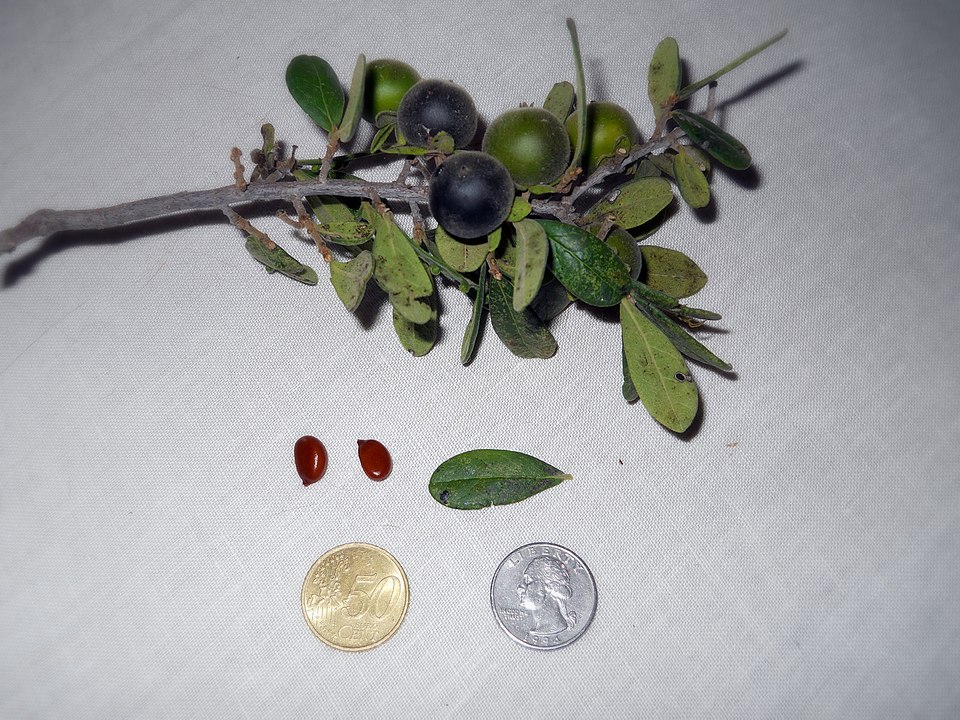
Texas persimmon, botanically Diospyros texana, is a small, slow-growing deciduous to semi-evergreen tree in the Ebenaceae family, typically reaching 10–25 feet (3–7.5 m) in height with a broad, rounded canopy. The species is instantly recognizable by its smooth, pale gray to chalk-white bark, which exfoliates in patches and reflects intense sunlight—an adaptation to hot, arid environments.
Leaves are simple, elliptic, thick, and leathery, dark green above and paler beneath. Small, greenish-white flowers appear in spring. The fruit is a round to slightly oblong berry, 2–3 cm (¾–1¼ in) in diameter, turning deep purple to nearly black when fully ripe.
In modern food science and plant chemistry literature, Texas persimmon is discussed for tannins, simple sugars, dietary fiber, phenolic compounds, and anthocyanins in ripe fruit. As with other persimmons, astringency is driven by soluble tannins that polymerize and become insoluble at full ripeness, transforming the fruit from inedible to sweet and jam-like.
Tannin Chemistry and Ripeness
The shift from astringent to palatable in Texas persimmon is governed by soluble tannin polymerization. As the fruit reaches full physiological ripeness, tannins bind together into larger, insoluble molecules that no longer interact with salivary proteins—eliminating astringency and revealing the fruit’s natural sweetness.
Origin, Ecology, and Cultural History
Texas persimmon is native to Central and South Texas, Oklahoma, northern Mexico, and parts of the Chihuahuan Desert, where it grows on limestone hills, rocky slopes, canyonlands, and dry woodlands.
Indigenous peoples used the ripe fruit fresh and dried, while the dark juice was widely used as a natural dye for hides, baskets, hair, and textiles. Spanish settlers adopted the fruit for preserves and fermented beverages.
Historically, the wood—dense, dark, and fine-grained—was prized for tool handles and small carved objects, though trees are typically too small for large lumber.
Tree Morphology, Sex Expression, and Reproductive Biology
Texas persimmon is dioecious, meaning male and female flowers occur on separate trees. Fruit production requires at least one male tree within pollination distance.
Pollination Requirement
Because Texas persimmon is dioecious, growers must plant both male and female trees to ensure fruit set. Flowers are insect-pollinated, primarily by bees. One male tree is generally sufficient for several females within close proximity.
Fruit contains several flattened seeds embedded in soft pulp. Seed viability is high, but fruit quality varies significantly among seedlings.
Climate Adaptation and Environmental Requirements
Texas persimmon thrives in USDA zones 7–10 and is exceptionally adapted to heat and drought.
| Parameter | Optimal Range |
|---|---|
| Temperature | 10–40°C (50–104°F) |
| Cold Tolerance | Survives brief freezes to approximately −12°C (10°F) once established |
| Sunlight | Full sun to light shade |
| Humidity | Low to moderate |
| Water Requirement | Very low once established |
Growth is slow but steady; supplemental irrigation increases growth rate but is not required for survival.
Soil Preferences and Root System
Texas persimmon prefers well-drained, calcareous soils, especially limestone-derived substrates.
| Parameter | Ideal Conditions |
|---|---|
| Soil pH | 7.0–8.5 |
| Texture | Rocky, sandy loam, or shallow soils |
| Organic Matter | Low to moderate |
| Drainage | Excellent (required) |
Roots are deep and wide-spreading, contributing to drought resilience and slope stabilization.
Propagation, Establishment, and Growing Systems
Seed propagation is the most common method for Texas persimmon.
Seed Propagation
- Seeds cleaned from fully ripe fruit
- Cold stratification for 60–90 days improves germination
- Seedlings show wide variability in fruit quality
Vegetative propagation (cuttings or grafting) is possible but uncommon due to slow growth and limited commercial demand.
Planting Considerations
| Parameter | Specification |
|---|---|
| Spacing | 15–25 feet (4.5–7.5 m) |
| Establishment Period | Slow first 2–3 years, then accelerates |
Common Growing Systems
- Native landscapes
- Wildlife plantings
- Low-input food forests
- Rockland and dryland orchards
Growth Cycle, Flowering, and Yield Dynamics
Flowering occurs in spring after leaf-out. Fruit matures late summer to early fall, depending on rainfall and temperature. Mature trees can produce several gallons of fruit per season, though yields vary annually.
Harvest Timing and Ripeness Control
Fruit must be harvested fully ripe—dark purple to black and soft to the touch.
- Unripe fruit is extremely astringent due to high soluble tannin content
- Fruits often drop when ripe; ground collection is common
- Rainfall near ripening improves fruit size and sweetness
Important: Ripeness Is Non-Negotiable
Only fully ripe Texas persimmon fruit is considered edible. Unripe fruit can cause severe mouth astringency and gastrointestinal discomfort due to high concentrations of soluble tannins. Wait for deep purple-black coloring and soft, yielding flesh before harvest.
Post-Harvest Handling and Storage
Fully ripe fruit is delicate and short-lived. Fruits should be handled gently to avoid rupture.
| Method | Conditions | Notes |
|---|---|---|
| Fresh | Refrigerated, 0–4°C (32–39°F) | 2–4 days maximum |
| Frozen | Standard freezer temperature | Excellent long-term preservation |
| Processed | Cooked or dried preparations | Most stable form |
Processing, Preservation, and Transformation
Fruit Processing
- Fresh consumption: Sweet, date-like flavor with jammy texture when fully ripe
- Pulping: Seeds removed; pulp used directly
- Jams & jellies: Natural sugars and pectin support gel formation
- Syrups: Cooked reductions concentrate sugars and color
- Fermentation: Used historically for wines and vinegars
- Drying: Produces chewy, date-like pieces when sliced thin
- Freezing: Preserves flavor and pigment exceptionally well
Dye Use (Historical & External)
- Juice from ripe fruit produces a deep black dye
- Historically used on hides, textiles, and hair
- Tannins bind strongly to proteins and fibers
Culinary Use, Intake Forms, and Integration
Texas persimmon is best treated as a processed fruit, not a fresh-eating orchard fruit.
Common Culinary Integrations
- Jams and preserves
- Syrups and sauces
- Baked goods
- Fermented beverages
- Blended fruit pastes
Typical servings are small (30–80 g pulp) due to richness and intensity.
Functional Compound Context
| Compound Class | Role |
|---|---|
| Tannins | Responsible for astringency pre-ripeness; polymerize at ripeness |
| Anthocyanins | Provide deep purple-black color |
| Phenolic Acids | Contribute antioxidant capacity |
| Sugars | Increase rapidly at full ripeness |
| Fiber | Supports gut fermentation |
Proper ripening is the key determinant of edibility.
Leaves, Wood, and Secondary Uses
- Leaves: High in tannins; historically used in dyeing and tanning contexts
- Wood: Extremely dense and hard; used for small tools and carving
- Bark: Decorative and protective; not used culinarily
Wildlife and Ecological Integration
Fruit is an important food source for wildlife including birds, deer, and small mammals.
Trees provide multiple ecological benefits:
- Erosion control on slopes and rocky terrain
- Shade in arid systems
- Browsing resistance due to tough foliage
Texas persimmon integrates well into native savanna and hill-country plantings.
Safety, Use Boundaries, and Considerations
- Only fully ripe fruit is considered edible
- Unripe fruit can cause severe mouth astringency and gastrointestinal discomfort
- Identification is important to distinguish from other Diospyros species
Cultural and Educational Importance
Texas persimmon is a cornerstone species for multiple areas of study and practice:
- Texas Hill Country ethnobotany
- Native food plant education
- Dye plant traditions
- Dryland agroecology
It exemplifies the relationship between environmental stress, tannin chemistry, and food use.
Scientific and Authoritative References
This article is informed by data and conclusions drawn from, but not limited to:
- Moerman, Native American Ethnobotany
- Turner et al., Medicinal Plants of North America
- USDA PLANTS Database: Diospyros texana
- Flora of North America, Ebenaceae
- Duke, Handbook of Edible Plants
- Texas A&M AgriLife Native Plant Resources
- Morton, Fruits of Warm Climates
- Stintzing & Carle, Food Chemistry
- Van Wyk & Wink, Medicinal Plants of the World
- Peterson Field Guides: Edible Wild Plants of North America