science
Bacopa Monnieri (Water Hyssop, Brahmi): Comprehensive Cultivation, Processing, and Use Guide
Complete guide to Bacopa monnieri cultivation covering aquatic growing systems, bacoside chemistry, propagation, harvest optimization.
Botanical Description and Modern Scientific Context
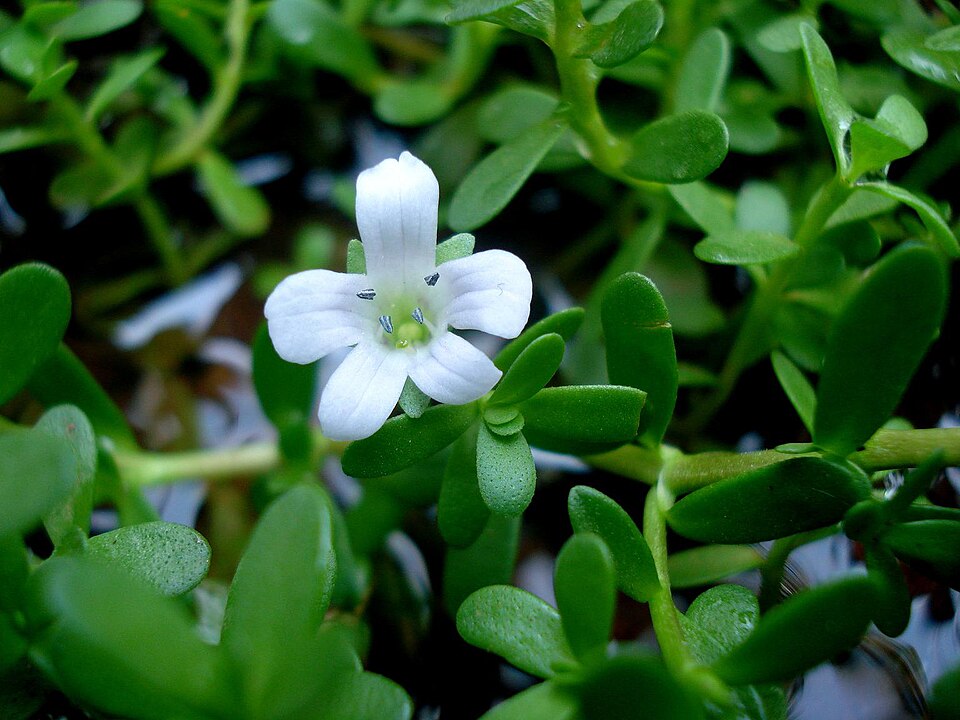
Bacopa monnieri is a low-growing, creeping, semi-aquatic perennial in the Plantaginaceae family. It forms dense mats of succulent, obovate leaves (1–2 cm long) on trailing stems that root readily at nodes. Small, actinomorphic flowers—white to pale lavender with yellow throats—appear singly from leaf axils during warm, bright periods.
The plant thrives at the interface of water and land. Its tissues are water-rich, and its growth habit reflects adaptation to fluctuating moisture, shallow inundation, and high light. Vegetative vigor is high; sexual reproduction occurs via small seeds but plays a minor role in cultivation compared with clonal spread.
In contemporary phytochemistry and neurobiology literature, B. monnieri is discussed for bacosides (notably bacoside A, a mixture of dammarane-type triterpenoid saponins), bacopasaponins, flavonoids, phenylethanoid glycosides, and alkaloids. Research explores interactions with cholinergic signaling, synaptic plasticity pathways, antioxidant defenses, and stress-response modulation—consistently framed within traditional use and whole-plant extract studies rather than isolated pharmaceutical claims.
Neurochemical and Functional Compound Context
Bacosides are associated with synaptic signaling, antioxidant enzyme modulation, and neuroprotective pathways in experimental models. Flavonoids and phenolics contribute antioxidant activity, while saponins influence membrane dynamics and absorption. Effects described in the literature emphasize gradual, cumulative changes rather than acute stimulation or intoxication.
Origin, Traditional Context, and Historical Use
Bacopa monnieri is native to South and Southeast Asia, Australia, Africa, and parts of the Americas, where it inhabits wetlands, rice paddies, slow-moving streams, and seasonally flooded soils.
In Ayurvedic traditions, the plant is known as Brahmi (a name also used regionally for Centella asiatica), historically associated with learning, memory, and calm focus. Classical texts emphasize long-term, gentle use within dietary and ritual contexts rather than acute effects.
Modern global interest emerged in the late 20th century as standardized extracts were studied for cognitive performance parameters, leading to renewed cultivation beyond its native range.
Plant Morphology, Growth Habit, and Reproductive Biology
Stems are prostrate to ascending, brittle when dry, and readily regenerate from fragments. Leaves are opposite, fleshy, and glabrous, contributing to the plant’s resilience under periodic submersion.
Flowers are insect-pollinated; seed capsules are small and inconspicuous. Seed viability exists, but vegetative propagation is the dominant and preferred method to maintain chemotype consistency.
Climate Adaptation and Environmental Requirements
Bacopa performs best in USDA zones 9–11 as a perennial and as a warm-season annual or indoor plant elsewhere. Growth accelerates with warmth and light; drought stress rapidly reduces biomass and phytochemical yield.
| Parameter | Optimal Range |
|---|---|
| Temperature | 20–35°C (68–95°F) |
| Cold Sensitivity | Growth slows below 15°C (59°F); frost is lethal to foliage |
| Sunlight | Full sun to bright partial shade |
| Humidity | Moderate to high |
| Water | Constant moisture to shallow inundation |
Soil, Water, and Nutrient Preferences
Bacopa prefers water-retentive, fine-textured soils or hydroponic and aquatic systems.
| Parameter | Ideal Conditions |
|---|---|
| Texture | Loam to silty clay; aquatic substrates acceptable |
| pH | 5.5–7.5 |
| Organic Matter | Moderate to high |
| Water Depth | Saturated soil to 2–10 cm (1–4 in) standing water |
Nutrient Requirements
Nutrient needs are modest but continuous:
| Nutrient | Role |
|---|---|
| Nitrogen (N) | Supports leaf biomass production |
| Phosphorus (P) | Supports rooting and flowering |
| Potassium (K) | Supports stress tolerance and metabolite balance |
| Micronutrients (Fe, Mg) | Iron and magnesium are particularly important in wet systems |
Propagation, Establishment, and Growing Systems
Stem cuttings root rapidly, with nodes placed in saturated soil or water achieving rooting in 3–7 days under warm conditions. Division of established mats is equally effective.
| Parameter | Specification |
|---|---|
| Primary Method | Stem cuttings with nodes in saturated soil or water |
| Rooting Time | 3–7 days under warm conditions |
| Alternative Method | Division of established mats |
| Plant Spacing | 20–30 cm (8–12 in) for rapid canopy closure |
Common Growing Systems
- Shallow outdoor ponds and wet beds: natural habitat simulation
- Rice-style flooded plots: ideal for large-scale production
- Raised beds with heavy irrigation: suitable for drier climates
- Aquaponics and hydroponics: controlled environment cultivation
- Containers kept consistently wet: accessible for home growers
Water Culture Details
Bacopa thrives at the interface of water and land. Shallow outdoor ponds, rice-style flooded plots, and aquaponic systems all provide excellent growing environments. The key requirement is constant moisture—saturated soil to shallow standing water of 2–10 cm (1–4 in). Even container-grown plants should be kept in saucers of water or self-watering setups to maintain the moisture levels this semi-aquatic species demands.
Growth Cycle, Harvest Frequency, and Yield
Bacopa establishes quickly and can be harvested every 3–5 weeks during active growth. Continuous cutting promotes lateral branching and tender regrowth. Under favorable conditions, fresh biomass yields are high relative to footprint, with multiple harvests per season.
Harvest Timing and Biomass Quality
Leaves and stems are harvested before flowering for peak bacoside concentration and tenderness. Morning harvest after dew dries preserves aroma and reduces post-harvest moisture issues.
- Harvest before flowering for peak bacoside concentration
- Morning harvest after dew dries preserves aroma and reduces moisture issues
- Older, woody growth contains more fiber and lower extract efficiency
Post-Harvest Handling and Storage
Fresh material is highly perishable and should be processed as quickly as possible after harvest.
| Method | Conditions | Notes |
|---|---|---|
| Immediate Processing | Fresh, same-day | Preferred method for maximum compound retention |
| Drying | Shade-dry or dehydrate at ≤40°C (104°F) | Low-temperature preservation of saponins |
| Freezing | Flash-freeze fresh material | Preserves fresh color and some phytochemicals for later extraction |
Quality Indicator
Dried material should retain green color and mild herbal aroma. Browning indicates degradation of active compounds and reduced extract quality.
Processing, Preservation, and Transformation
Drying and Powdering
Low-temperature drying preserves saponins effectively. Powdering increases surface area for extraction but accelerates oxidation if exposed to air and light. Store powdered material in airtight, light-protected containers.
Aqueous Preparations (Traditional Context)
Water extracts polysaccharides and some saponins. Heat improves extraction efficiency, but prolonged boiling reduces delicate constituents.
Lipid-Based Infusions
Traditional preparations often combine bacopa with fats. Lipids aid the bioavailability of triterpenoid saponins in dietary contexts, making this a historically significant preparation method.
Alcoholic and Hydroalcoholic Extracts
Ethanol–water mixtures extract bacosides efficiently. Concentration and standardization are discussed in research contexts rather than home replication.
Fresh Juicing and Pastes
Used traditionally in regions of origin. High water content results in short shelf life, requiring immediate consumption or further preservation.
Culinary Use, Intake Forms, and Integration
Bacopa is intensely bitter, which limits its culinary roles. Modern use focuses on processed forms rather than fresh culinary consumption.
Traditional integrations include:
- Small amounts incorporated into herbal preparations
- Combination with sweeteners or fats to balance bitterness
- Inclusion in multi-herb formulations for complementary effects
Safety, Tolerance, and Use Boundaries
Bacopa has a long history of traditional use, but bitterness and gastrointestinal sensitivity are noted in some individuals.
Modern guidance emphasizes:
- Gradual introduction: start with small amounts and increase slowly
- Individual tolerance: awareness of personal digestive response
- Pregnancy precaution: avoidance during pregnancy unless professionally supervised
- Water purity: as with many wetland plants, purity of growing water is critical to avoid contamination
Ecological and System Integration
Bacopa functions effectively within multiple ecological and agricultural systems. Dense growth suppresses weeds and stabilizes wet soils.
- Wetland groundcover: provides erosion control and habitat value
- Nutrient buffer in aquatic systems: absorbs excess nutrients from water
- Living mulch in saturated soils: suppresses weed growth while retaining moisture
- Aquaponic biofiltration component: filters water while producing harvestable biomass
Seed Production and Genetic Considerations
Seed production occurs but is secondary to vegetative propagation. Chemotype consistency is best maintained through cloning from known stock. Cross-regional ecotypes vary in growth habit and bacoside profiles, making source selection important for growers targeting specific compound concentrations.
Cultural and Educational Importance
Bacopa is a cornerstone species in discussions of:
- Traditional cognitive tonics and Ayurvedic herbal traditions
- Wetland ethnobotany and semi-aquatic plant ecology
- Plant secondary metabolites and stress adaptation mechanisms
- Sustainable aquatic herb production and agroecological design
Scientific and Authoritative References
This article is informed by data and conclusions drawn from, but not limited to:
- Aguiar & Borowski, Phytochemistry
- Kongkeaw et al., Journal of Ethnopharmacology
- Stough et al., Psychopharmacology
- Morgan & Stevens, Journal of Alternative and Complementary Medicine
- USDA PLANTS Database: Bacopa monnieri
- Charles et al., Journal of Natural Products
- Deepak & Amit, Indian Journal of Pharmacology
- WHO Monographs on Selected Medicinal Plants
- van Wyk & Wink, Medicinal Plants of the World
- Singh & Dhawan, Journal of Ethnopharmacology