guides
Heirloom Giant Sugarcane (Saccharum officinarum & Traditional Landrace Hybrids): Comprehensive Cultivation, Processing, and Use Guide
Complete guide to heirloom giant sugarcane cultivation covering Saccharum officinarum landraces, growing parameters, propagation from setts.
Botanical Description and Modern Scientific Context
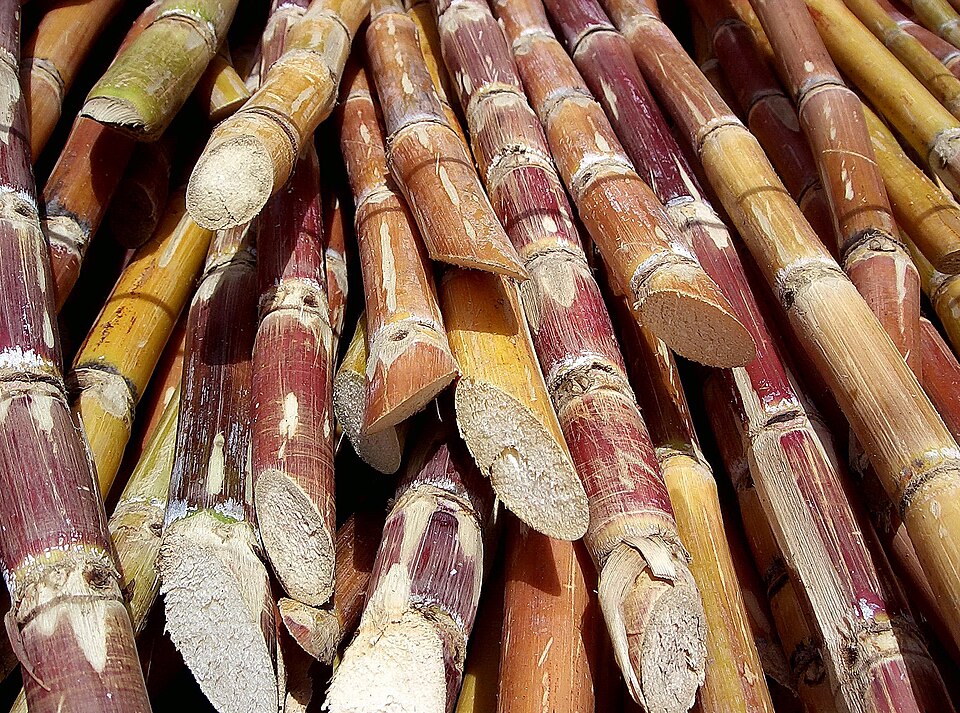
Heirloom giant sugarcane refers to traditional, non-hybridized or minimally selected landrace cultivars of Saccharum officinarum and related historical cane types, characterized by exceptionally tall culms, thick internodes, high fiber content, and complex juice chemistry. These perennial tropical grasses routinely reach 10–20 feet (3–6 m) in height under favorable conditions, with segmented, jointed stalks, broad linear leaves, and extensive fibrous root systems.
Unlike modern commercial sugarcane bred primarily for high sucrose recovery and mechanized processing, heirloom canes often exhibit broader genetic diversity, increased mineral content, higher polyphenol concentrations, and a more complex balance of sucrose, glucose, fructose, and organic acids.
In modern scientific literature, sugarcane is discussed in relation to carbohydrate metabolism, mineral transport, and phenolic antioxidants present in cane juice and rind. Compounds such as policosanols, phenolic acids, flavones, and wax fractions are studied for their interaction with oxidative pathways, lipid metabolism signaling, and gut microbial fermentation, particularly when cane is consumed as fresh juice or minimally processed products.
Heirloom vs. Commercial Cane
Heirloom and landrace sugarcanes retain a broader spectrum of minerals, polyphenols, and organic acids compared to modern commercial varieties optimized for sucrose extraction. This biochemical complexity is of increasing interest in food science and nutritional research, particularly regarding minimally refined sweeteners and whole-juice preparations.
Origin, Domestication, and Historical Use
Sugarcane originated in New Guinea and surrounding Melanesian regions, where it was domesticated thousands of years ago and spread throughout Southeast Asia, India, the Middle East, and eventually Europe and the Americas via trade and colonization.
Heirloom and landrace canes were historically selected for chewing quality, juice flavor, disease tolerance, and adaptability to local soils rather than purely for sugar yield. In many cultures, cane was consumed fresh as a chewing stalk, boiled into syrups, fermented into beverages, or crystallized into minimally refined sugars.
Traditional Processing Heritage
Traditional processing emphasized slow evaporation, open-pan boiling, and fermentation rather than industrial centrifugation, preserving minerals, phenolics, and flavor compounds now largely absent from refined sugar products.
Cane Morphology, Seed Biology, and Propagation
Sugarcane produces tall, jointed culms composed of nodes and internodes. Each node contains a dormant bud capable of producing a new plant, making vegetative propagation the dominant reproductive strategy.
While sugarcane does produce seed under specific photoperiod and climate conditions, true seed (referred to as “fuzz”) is genetically variable and primarily used in breeding programs rather than production.
Sett Propagation
Propagation is conducted using stem cuttings (setts) containing 2–4 viable nodes. Heirloom cane setts are selected from mature, disease-free stalks and planted horizontally or slightly angled in prepared furrows.
| Parameter | Specification |
|---|---|
| Propagation Method | Stem cuttings (setts) with 2–4 nodes |
| Sett Source | Mature, disease-free stalks |
| Planting Orientation | Horizontal or slightly angled in prepared furrows |
| True Seed Use | Breeding programs only; genetically variable |
Climate Adaptation and Environmental Requirements
Heirloom giant sugarcane thrives in USDA zones 9–12, with extended warm seasons and minimal frost risk. In marginal climates, cane can be grown as a ratoon crop with winter protection.
| Parameter | Optimal Range |
|---|---|
| Active Growth Temperature | 24–34°C (75–93°F) |
| Minimum Soil Temperature at Planting | ≥18°C (65°F) |
| Sunlight | Full sun, 8–10+ hours daily |
| Relative Humidity | 60–85% |
| Annual Rainfall / Irrigation | 1,200–2,500 mm (47–98 in), evenly distributed |
Frost Sensitivity
Frost damages foliage and can kill stalks; however, underground buds may resprout if the soil itself does not freeze. In marginal zones, heavy mulching and windbreaks can extend the growing range.
Soil Preferences, Fertility, and Root Zone Management
Sugarcane prefers deep, fertile, well-drained loam or clay-loam soils with high organic matter and a pH range of 5.5–7.5. Nutrient demand is high due to massive biomass production.
| Nutrient | Role | Notes |
|---|---|---|
| Nitrogen (N) | Supports vegetative growth | Excess late-season N reduces sucrose concentration |
| Phosphorus (P) | Root development and early vigor | Important during establishment phase |
| Potassium (K) | Sugar transport, stalk strength, juice quality | Critical nutrient for cane quality |
| Calcium & Magnesium | Stalk rigidity, disease resistance | Often supplied through liming |
| Silicon | Structural integrity, pest resistance | Abundant in many tropical soils |
| Zinc & Iron | Overall cane health | Micronutrient supplementation as needed |
Planting Methods and Cultivation Systems
Setts are planted in early spring or at the onset of the rainy season when soil temperatures are stable above 18°C (65°F).
Planting Parameters
| Parameter | Specification |
|---|---|
| Furrow Depth | 10–15 cm (4–6 in) |
| Sett Spacing | 30–45 cm (12–18 in) |
| Row Spacing | 1.2–1.5 m (4–5 ft) |
Cultivation Systems
- Open-field rows: Standard production layout for most climates
- Raised beds: Preferred in heavy or poorly drained soils
- Wind-protected plots: Necessary due to tall stalk height and lodging risk
- Perennial ratoon crop: Harvested annually from the same rootstock, reducing replanting labor
Growth Cycle, Ratooning, and Biomass Management
Sugarcane requires 9–14 months to reach full maturity, depending on climate and cultivar. Growth progresses through three distinct phases:
| Growth Phase | Duration | Description |
|---|---|---|
| Germination & Tillering | 0–3 months | Bud sprouting, root establishment, and tiller production |
| Grand Growth Phase | 3–9 months | Rapid stalk elongation and biomass accumulation |
| Maturation & Sugar Accumulation | Final 2–4 months | Sucrose concentration increases as growth slows |
Heirloom cane is often ratooned for 2–5 years, with new stalks emerging from basal buds after harvest. Ratooning reduces replanting labor but requires careful nutrient management to maintain yield and juice quality across successive harvests.
Ratoon Management
Each successive ratoon crop may produce slightly reduced yields. Maintaining soil fertility, managing weed pressure, and ensuring adequate irrigation between harvests are essential for sustaining productive ratoon cycles over multiple years.
Harvest Timing and Juice Quality Optimization
Harvest is timed when internodes are fully elongated, leaves begin to senesce naturally, and juice °Brix typically ranges from 16–22, depending on cultivar and environment.
- Harvesting too early reduces sugar concentration and juice quality
- Late harvest increases fiber content and lodging risk
- Stalks are cut at ground level, with leaves stripped and tops removed for compost or fodder
- Anthocyanin and polyphenol content varies with cultivar and maturity stage
Post-Harvest Handling and Processing
Cane juice begins fermenting rapidly after harvest due to native yeasts and bacteria; processing typically occurs within 24 hours.
| Processing Step | Method | Notes |
|---|---|---|
| Juice Extraction | Crushing or pressing | Releases juice rich in sugars, minerals, and phenolics |
| Clarification | Settling, liming, or heating | Removes suspended solids and impurities |
| Evaporation | Slow boiling | Concentrates juice into syrups, panela, jaggery, or molasses |
| Crystallization | Minimal refinement | Yields coarse sugars retaining mineral content |
Bagasse Utilization
Bagasse—the fibrous residue remaining after juice extraction—is commonly used as fuel for evaporation, mulch for field cover, animal feed, or compost input. In regenerative systems, bagasse cycling contributes significantly to soil organic matter.
Processing, Preservation, and Transformation
Beyond primary juice extraction, heirloom sugarcane supports a range of preservation and transformation methods that retain its distinctive flavor and nutritional complexity.
- Juice stabilization: Heat treatment or acidification slows microbial growth and extends shelf life
- Fermentation: Cane juice is fermented into beverages, vinegars, or alcohol using yeast or mixed cultures
- Drying: Concentrated syrups can be dehydrated into solid blocks or powders
- Wax extraction: Cane rind contains waxes and policosanols, extracted industrially for specialty applications
Open-Pan vs. Industrial Processing
Traditional open-pan processing preserves flavor complexity and micronutrients compared to industrial refining. The slow evaporation approach yields products such as panela and jaggery that retain the full mineral and phenolic profile of the original juice.
Culinary Use, Intake Forms, and Integration
Heirloom sugarcane is consumed as fresh-pressed juice, boiled syrups, crystalline sugars, fermented beverages, or chewed raw for juice extraction. Culinary integration emphasizes dilution and balance:
- Fresh juice blended with citrus or herbs for refreshing beverages
- Syrups used sparingly as sweeteners in cooking and baking
- Minimally refined sugars incorporated into baked goods and beverages
- Fermented preparations as vinegar or alcoholic beverages
Consumption is traditionally contextualized within whole-food diets rather than as isolated sweetener intake, reflecting the cultural approach to cane as a seasonal, minimally processed food source.
Extraction, Industrial Uses, and Functional Compounds
Extracted compounds from sugarcane include sucrose, glucose, fructose, phenolic acids, flavones, policosanols, and wax fractions. Industrial processing may include centrifugation, crystallization, and refining, while small-scale systems emphasize minimal processing to retain complexity.
Finished products range from light golden syrups to dark molasses-like concentrates, depending on processing intensity. The degree of refinement directly correlates with mineral and polyphenol retention—less refined products preserve significantly more of the original cane chemistry.
System Integration and Additional Considerations
Heirloom sugarcane serves as a high-biomass crop for regenerative systems, providing mulch, fuel, and carbon inputs to the farming operation.
- Tall growth habit: Necessitates wind management, staking in exposed areas, and appropriate spacing considerations
- Genetic diversity: Among heirloom canes contributes to resilience but also variability in sugar content and growth habit
- Regenerative integration: Biomass cycling through bagasse, leaf mulch, and root residue builds soil carbon over time
- Companion systems: Sugarcane hedgerows can serve as windbreaks, privacy screens, and habitat corridors in diversified landscapes
Scientific and Authoritative References
This article is informed by data and conclusions drawn from, but not limited to:
- Alexander, Sugarcane Physiology
- Moore & Botha, Sugarcane: Physiology, Biochemistry, and Functional Biology
- USDA Crop Profile: Sugarcane
- FAO Sugarcane Production Guides
- Rao et al., Journal of Agricultural and Food Chemistry
- Duarte-Almeida et al., Food Chemistry
- Prasad et al., Plant Foods for Human Nutrition
- Chen & Chou, Cane Sugar Handbook
- EFSA Reports on Sugars and Policosanols
- International Society of Sugar Cane Technologists Publications