science
Pomegranate (Punica granatum): A Complete Botanical Monograph
Comprehensive monograph on pomegranate covering botanical identity, phytochemistry, cultivation, propagation, extraction, and small-scale agricultural use.
1. Botanical Identity and Morphology
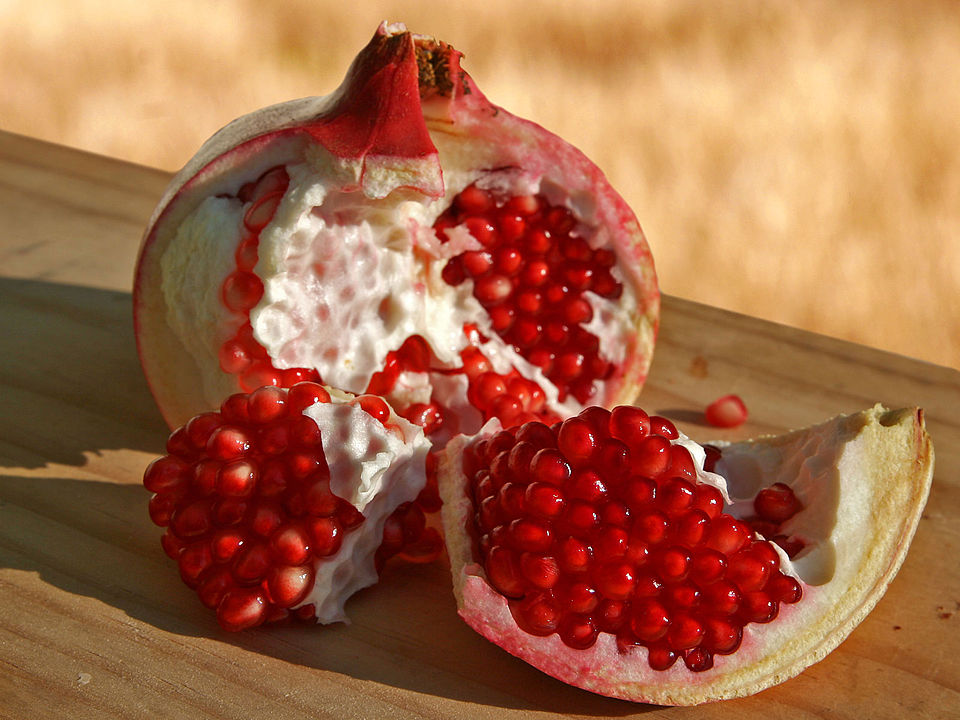
Pomegranate (Punica granatum) is a long-lived, deciduous to semi-evergreen shrub or small tree, typically reaching 8–20 feet in height, characterized by a dense, multi-stemmed growth habit, glossy narrow leaves, and striking scarlet flowers. The fruit is botanically classified as a balausta, defined by a thick leathery rind enclosing hundreds of arils—each aril consisting of a translucent, juice-filled sarcotesta surrounding a lignified seed.
Modern cultivars vary widely in fruit size, acidity, sugar content, tannin concentration, seed hardness, and pigment density. These differences are agriculturally and chemically significant, as different cultivars are favored for fresh consumption, juicing, polyphenol extraction, or rind utilization.
Unlike many fruiting trees, pomegranate exhibits extraordinary tolerance to drought, salinity, alkaline soils, and heat, making it particularly suited to arid and semi-arid climates where other fruit trees struggle.
2. Origin, Domestication, and Historical Use
Pomegranate is native to a broad region spanning Iran, northern India, Central Asia, and the eastern Mediterranean, with archaeological evidence of cultivation dating back over 4,000 years. It was disseminated widely through Persian, Phoenician, Greek, Roman, and later Islamic agricultural systems.
Historically, the plant was valued not only as food but as a multifunctional medicinal and industrial resource:
- Arils and juice for hydration and nourishment
- Rinds for tannin-rich dyes, inks, and leather tanning
- Bark and roots in traditional antiparasitic preparations (now largely obsolete due to toxicity concerns)
- Flowers for pigment extraction and topical preparations
These historical uses laid the groundwork for modern interest in pomegranate as a polyphenol-dense functional plant, though contemporary science reframes these uses through biochemical and physiological mechanisms rather than folkloric claims.
3. Phytochemistry and Biological Interaction
Pomegranate is among the most chemically complex edible fruits studied, with its biological relevance driven primarily by ellagitannins, anthocyanins, flavonols, and organic acids.
Punicalagins (α and β)
High-molecular-weight ellagitannins concentrated in the rind. Primary drivers of antioxidant activity in pomegranate preparations.
Ellagic Acid
Released during hydrolysis of ellagitannins. Studied for interactions with cellular signaling pathways.
Anthocyanins
Delphinidin, cyanidin, and pelargonidin glycosides responsible for the characteristic red coloration of arils and juice.
Urolithin Precursors
Metabolites formed indirectly via gut microbiota. Bioavailability is highly individual and microbiome-dependent.
Current literature describes these compounds as interacting with:
- Oxidative signaling pathways
- Nitric oxide metabolism
- Inflammatory mediator expression
- Mitochondrial and endothelial signaling cascades
Research Context
These interactions are context-dependent, influenced by digestion, microbiome composition, and preparation method. No disease claims are made here; the focus is on biochemical behavior as documented in peer-reviewed research.
4. Seeds, Arils, and Reproductive Biology
Seed Structure and Appearance
Each aril encloses a true seed with a woody inner testa. Seed hardness varies significantly by cultivar:
- Soft-seeded varieties: preferred for fresh eating and juicing
- Hard-seeded varieties: often higher in tannins and favored for processing
On-Plant Development
Seeds develop over 5–7 months, with pigment accumulation occurring late in fruit maturation. Harvest timing strongly affects sugar-acid balance and polyphenol stability.
Seed Viability
Seeds remain viable for several years when fully dried, stored cool (below 50°F), and protected from humidity and light.
5. Propagation Methods: Seed, Cutting, and Cloning
Seed Propagation
Seed-grown pomegranates show high genetic variability and are primarily used for breeding, rootstock development, and genetic conservation. Seeds are typically cold-stratified briefly or sown fresh after cleaning to remove sugars that promote microbial growth.
Vegetative Propagation (Dominant Method)
Hardwood and semi-hardwood cuttings are the industry standard due to genetic fidelity and faster fruiting (2–3 years vs. 4–6 from seed). Cuttings are generally taken during dormancy, treated with rooting hormones, and rooted under moderate humidity with well-aerated media.
Clonal Considerations
Pomegranate clones exhibit remarkable consistency, but long-term orchards benefit from occasional rejuvenation pruning to prevent vascular decline.
6. Environmental Requirements and Growing Parameters
| Parameter | Requirement |
|---|---|
| USDA Zones | 7–11 |
| Ideal Temperature | 75–95°F (heat enhances sugar and anthocyanin synthesis) |
| Cold Tolerance | ~10°F when dormant |
| Sunlight | Full sun, 8–10 hours daily (essential for color and phytochemical density) |
| Water | Moderate during fruit set; reduced near harvest to prevent splitting |
| Soil | Well-drained loam or sandy loam, pH 5.5–8.5 |
| Salt Tolerance | Remarkably high compared to other fruit trees |
Cool nights near harvest improve flavor complexity. Overwatering dilutes sugars and polyphenols.
7. Nutrient Requirements and Soil Management
Pomegranate is not nutrient-intensive but responds strongly to balanced mineral availability.
- Nitrogen: promotes vegetative growth; excess reduces fruiting
- Potassium: essential for fruit size and sugar transport
- Calcium: strengthens rind integrity
- Micronutrients: zinc and iron deficiencies appear in alkaline soils
Organic matter improves microbial activity, which indirectly affects polyphenol synthesis through stress signaling pathways.
8. Flowering, Pollination, and Fruit Set
Pomegranate produces two flower types: male flowers (non-fruiting) and hermaphroditic flowers (fruit-bearing). Environmental stress, nutrient imbalance, or pruning timing can skew flower ratios. Pollination is primarily insect-mediated but not strictly required for fruit development.
9. Harvest Timing and Peak Compound Preservation
Harvest Indicators
- Metallic sound when tapped
- Full cultivar-specific coloration
- Brix stabilization
Timing Tradeoff
Research shows that ellagitannin concentration peaks slightly before full sugar maturity, creating a tradeoff between flavor and extract yield depending on end use. Harvesting is typically done by hand to avoid rind damage that accelerates oxidation.
10. Post-Harvest Handling, Drying, and Storage
Fresh Storage
Whole fruits store for months at 32–41°F with high humidity.
Drying Components
- Rinds: air-dried or low-temperature dehydrated
- Arils: frozen or juiced immediately
- Seeds: dried for oil extraction or storage
Low heat is emphasized to preserve thermolabile polyphenols.
11. Preparation and Use: Raw, Culinary, and Functional
Raw Use
Arils are consumed fresh or added to foods for acidity and color.
Culinary Processing
Common preparations include juices, reductions, fermented beverages, and syrups/molasses. Heat alters anthocyanin structure but increases ellagic acid availability via hydrolysis.
12. Extraction Practices
Home-Scale Methods
- Water extraction: favors tannins and acids
- Ethanol-water extraction: broader polyphenol spectrum
- Oil infusion of seeds: captures lipid-soluble components
These processes typically focus on rind and mesocarp for tannins, seeds for oil, and juice for anthocyanins.
Industrial Context
Commercial operations use membrane filtration, spray drying, and solvent recovery systems, which are not replicated at home but inform best-practice understanding.
13. Storage of Preparations
- Protect from light, oxygen, and heat
- Acidic environments stabilize anthocyanins
- Oils require antioxidant protection
14. Systems Integration for Small Farms and Large Yards
Pomegranate integrates well into polyculture orchards, water-limited systems, and value-added processing operations. Its multiple usable fractions make it unusually efficient in land-to-product conversion.
15. Key Scientific References
The information in this article is synthesized from peer-reviewed literature and agricultural research, including but not limited to:
- Seeram et al., Journal of Agricultural and Food Chemistry
- Aviram & Dornfeld, Journal of Medicinal Food
- Gil et al., Journal of Agricultural and Food Chemistry
- Fischer et al., Plant Foods for Human Nutrition
- Viuda-Martos et al., Food Research International
- Lansky & Newman, Journal of Ethnopharmacology
- Tezcan et al., Food Chemistry
- Al-Zoreky, Food Chemistry
- FDA GRAS notices and USDA pomological bulletins
- FAO cultivation manuals and Mediterranean orchard studies
- UC Davis Fruit & Nut Research Center publications
Closing Note
Pomegranate is best understood not as a single-use fruit, but as a botanical system—one in which climate, cultivation method, harvest timing, and preparation all shape the final chemical and sensory outcome. Its enduring relevance arises from this adaptability, making it uniquely suited to small-scale growers seeking both resilience and depth.