guides
Prickly Pear (Opuntia spp.): Comprehensive Cultivation, Processing, and Use Guide
Complete guide to prickly pear cultivation covering Opuntia species, growing parameters, pad propagation, harvest optimization, glochid removal.
Botanical Description and Modern Scientific Context
Prickly pear refers to multiple species within the genus Opuntia, a group of drought-adapted cacti native to the Americas. Plants form flattened, paddle-shaped stem segments called cladodes (commonly called pads or nopales) that function as photosynthetic organs. True leaves are reduced to spines or glochids—fine, barbed hairs that readily detach and embed in skin.
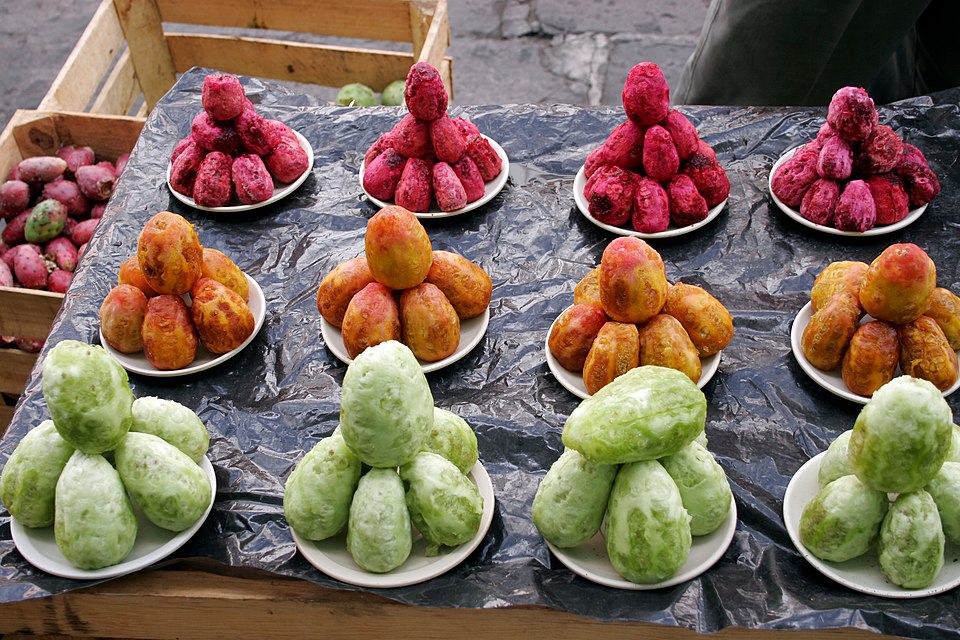
Mature plants range from low-spreading forms to tree-like structures 10–20 feet (3–6 m) tall, depending on species. Flowers are large, showy, and typically yellow, orange, red, or pink, followed by oval to pear-shaped fruits known as tunas, which range in color from green and yellow to deep red and purple.
In modern food science and plant physiology literature, prickly pear is discussed for its soluble fiber (mucilage and pectins), betalain pigments (betacyanins and betaxanthins), vitamin C, magnesium, calcium, and polyphenols. These compounds are studied for hydration dynamics, glycemic modulation, gut fermentation, antioxidant signaling, and color stability in foods, framed within whole-food contexts rather than pharmaceutical claims.
Whole-Food Research Context
Prickly pear compounds are studied within the framework of food science and botanical research. Betalains, mucilage, and polyphenols interact with digestive processes, gut microbiota, and cellular redox systems—these interactions are discussed in the context of dietary patterns and whole-food intake rather than isolated pharmaceutical intervention.
Origin, Domestication, and Cultural History
Opuntia species are native to Mexico, the southwestern United States, Central America, and parts of South America, where they were domesticated thousands of years ago.
In Mesoamerican cultures, prickly pear was a staple food, medicine-adjacent plant, living fence, and dye source. It holds deep cultural significance in Mexico and appears on the Mexican flag.
Spanish colonization spread Opuntia globally. Today it is naturalized across the Mediterranean, Africa, Australia, and parts of Asia, where it is used for food, fodder, erosion control, and agroforestry.
Plant Morphology, Spines, and Reproductive Biology
Cladodes are thick, water-rich, and covered in areoles that produce spines and glochids. Glochids are the primary handling hazard and must be removed before use.
Flowers are insect-pollinated and produce seeds embedded in fibrous pulp within the fruit. Reproduction occurs via two primary methods:
- Vegetative propagation: Pads root easily when placed in contact with soil
- Seed propagation: Slow and genetically variable
Vegetative propagation preserves cultivar traits and is the dominant method in cultivation.
Handling Caution: Glochids
Glochids are fine, barbed hairs found at the areoles of prickly pear pads and fruits. They detach easily on contact and embed in skin, causing persistent irritation. Always use thick leather gloves, tongs, or newspaper wrapping when handling fresh pads or fruits. Remove glochids by brushing, flame singeing, or rubbing under running water before processing.
Climate Adaptation and Environmental Requirements
Prickly pear thrives in USDA hardiness zones 7–11, with some cold-hardy species surviving brief freezes. Excess humidity and poor airflow increase rot risk significantly.
| Parameter | Optimal Range |
|---|---|
| Growing Season Temperature | 20–35°C (68–95°F) |
| Cold Tolerance | Some species tolerate -10°C (14°F) when dry |
| Sun Exposure | Full sun |
| Humidity | Low to moderate |
| Water Requirements | Very low once established |
Soil Preferences and Root Zone Management
Prickly pear requires excellent drainage; roots are shallow and rot-prone in saturated soils. Overly fertile soils promote weak, waterlogged pads.
| Parameter | Specification |
|---|---|
| Soil Texture | Sandy, gravelly, or rocky |
| Soil pH | 6.0–8.0 |
| Organic Matter | Low to moderate |
| Drainage | Excellent (critical requirement) |
Propagation, Establishment, and Growing Systems
Pad Propagation
Prickly pear is most commonly propagated from mature pads. Pads are cut from the parent plant and allowed to callus (dry at the wound site) for several days before planting. Rooting occurs in warm, dry soil, and establishment is rapid compared to seed-grown plants.
Spacing and Growing Systems
| Parameter | Specification |
|---|---|
| Plant Spacing | 1–2 m (3–6 ft) depending on growth habit |
| Arid Landscapes | Native habitat; minimal irrigation needed |
| Food Forests | Dry climate food forest integration |
| Living Fences | Traditional use as boundary plantings |
| Containers | Suitable with drainage emphasis |
Growth Cycle, Flowering, and Yield Dynamics
Plants establish slowly but become long-lived, producing for decades with minimal maintenance. Flowering begins after 2–4 years, depending on species and growing conditions.
A mature plant can produce 20–100+ fruits per season, with yield increasing as the plant develops more cladode surface area. Prickly pear is one of the most productive food crops per unit of water consumed, making it exceptionally well-suited to arid and semi-arid growing regions.
Harvest Timing and Quality Optimization
Pads (Nopales)
- Harvested young at 10–20 cm (4–8 in) long for maximum tenderness
- Older pads are fibrous and more mucilaginous
- Young pads have fewer, softer glochids and superior culinary texture
Fruits (Tunas)
- Harvested when fully colored and slightly soft to the touch
- Sugar content increases rapidly near full maturity
- Gloves and tools are essential during harvest to avoid glochid exposure
Harvest Safety
Always use thick leather gloves, long tongs, or folded newspaper when harvesting prickly pear pads and fruits. Glochids are nearly invisible and cause persistent skin irritation. Harvesting in early morning when plants are cool and turgid can reduce glochid detachment.
Post-Harvest Handling and Glochid Removal
Glochid removal is the critical first step in post-harvest processing. Common methods include:
- Brushing: Stiff-bristled brushes to sweep away loose glochids
- Flame singeing: Brief exposure to open flame burns off fine hairs
- Rubbing under water: Running water helps dislodge embedded glochids
Pads and fruits are washed thoroughly after de-spining before any culinary or processing use.
| Product | Storage Conditions | Shelf Life |
|---|---|---|
| Pads (Nopales) | Refrigerated, high humidity | 1–2 weeks |
| Fruits (Tunas) | 5–10°C (41–50°F) | 2–4 weeks |
Processing, Preservation, and Transformation
Pads (Nopales)
| Method | Details |
|---|---|
| Fresh Cooking | Sautéed, grilled, or boiled |
| Blanching | Reduces mucilage content and improves texture |
| Pickling | Acid stabilizes texture for long-term storage |
| Drying | Produces powders rich in soluble fiber |
| Juicing | Produces viscous green juice high in mucilage |
Fruits (Tunas)
| Method | Details |
|---|---|
| Fresh Eating | Sweet-tart flavor; consumed raw after peeling |
| Juicing | Produces vividly colored juice rich in betalains |
| Fermentation | Wine, vinegar, and lacto-fermented preparations |
| Jams & Syrups | High natural pectin aids gelling |
| Drying | Produces chewy fruit leathers |
Betalain Pigment Stability
Betalain pigments in prickly pear fruit are heat-stable in moist environments and acid-stable, making them well-suited to cooking, canning, and fermentation processes. This distinguishes them from anthocyanins, which degrade more readily under heat exposure.
Culinary Use, Intake Forms, and Integration
Pads (Treated as Vegetables)
- Scrambled with eggs
- Added to stews and tacos
- Grilled or roasted as a side dish
- Pickled or fermented for preservation
Fruits (Used as Fresh Fruit or Flavoring)
- Juices and aguas frescas
- Sorbets and frozen desserts
- Syrups and candies
Typical Serving Sizes
| Product | Serving Size |
|---|---|
| Pads (cooked) | 100–200 g |
| Fruit pulp | 80–150 g |
Functional Compound Context
Prickly pear contains a diverse array of bioactive compounds distributed across pads, fruit, and seeds. Fiber content is highest in pads, while pigments concentrate in fruit pulp.
| Compound Class | Function |
|---|---|
| Mucilage & Pectin | Soluble fiber influencing glycemic response |
| Betalains | Antioxidant pigments (betacyanins and betaxanthins) |
| Polyphenols | Oxidative stress modulation |
| Minerals | Calcium, magnesium, potassium |
| Vitamin C | Redox support and immune function |
Seeds, Oil, and Secondary Products
Prickly pear seeds are hard and fibrous, typically discarded during fruit processing but valuable when pressed industrially for oil. Prickly pear seed oil is rich in linoleic acid and tocopherols (vitamin E) and is used primarily in cosmetic and skincare formulations due to its emollient and antioxidant properties.
External and Topical Use Context
Mucilage-rich pad extracts are used traditionally and in contemporary formulations for skin hydration, barrier repair, and cosmetic applications. Pads are studied for their moisture-retention and soothing properties in topical applications, particularly in after-sun care and dry-skin formulations.
Traditional Topical Use
In traditional practice, split prickly pear pads were applied directly to skin as poultices. Modern research investigates the mucilage fraction for its film-forming and humectant properties, supporting its use in natural cosmetic formulations.
System Integration and Additional Considerations
Prickly pear is ideal for integration into low-input agricultural and landscape systems. It pairs well with other xerophytic plants and benefits from minimal intervention. Once established, plants require very little maintenance.
- Drought-prone landscapes: Exceptionally water-efficient once established
- Soil stabilization: Shallow root networks bind loose soils and reduce erosion
- Wildlife habitat: Provides food and shelter for birds, insects, and small mammals
- Low-input food systems: Produces both vegetable (pads) and fruit (tunas) with minimal irrigation, fertilization, or pest management
Scientific and Authoritative References
This article is informed by data and conclusions drawn from, but not limited to:
- Nobel, Environmental Biology of Agaves and Cacti
- FAO, Agro-Industrial Utilization of Cactus Pear
- Sáenz et al., Food Chemistry
- McGee, On Food and Cooking
- USDA PLANTS Database: Opuntia spp.
- Stintzing & Carle, Trends in Food Science & Technology
- EFSA opinions on betalains
- Felker et al., Journal of Arid Environments
- Duke, Handbook of Edible Plants
- Inglese et al., Cactus Pear Production and Uses